
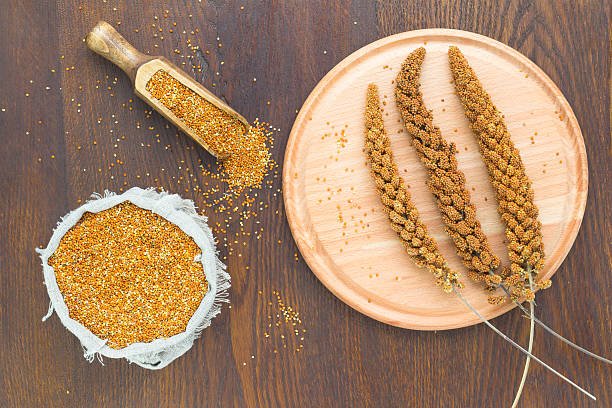
In a world increasingly conscious of health, sustainability, and food security, millets have re-emerged as a powerful ally on our plates. Once dismissed as “coarse grains,” millets are now being hailed as nutritional powerhouses and climate-resilient crops, offering benefits for both human health and the environment.
What Are Millets?
Millets are a group of small-seeded grasses that have been cultivated for thousands of years. They thrive in arid and semi-arid regions and require minimal inputs compared to more common grains like wheat and rice.
Some of the most popular varieties include:
-
Pearl millet (Bajra)
-
Finger millet (Ragi)
-
Foxtail millet
-
Little millet
-
Barnyard millet
-
Kodo millet
-
Proso millet
Nutritional Benefits of Millets
Millets are naturally gluten-free, high in fiber, and rich in essential nutrients such as:
-
Iron – Helps combat anemia.
-
Calcium – Important for bone health (especially high in finger millet).
-
Magnesium and Phosphorus – Vital for energy metabolism.
-
B-complex vitamins – Support nerve function and energy release.
Their low glycemic index makes them ideal for managing blood sugar levels, making them a preferred choice for diabetics.
Millets and Sustainability
Millets are often described as climate-smart crops because:
-
They require significantly less water than rice or wheat.
-
They grow well in poor soils and withstand high temperatures.
-
They have a short growing season, making them ideal for crop rotation and food security.
In an era of increasing climate unpredictability, millets offer a sustainable alternative that supports both small farmers and planetary health.
Culinary Versatility
One of the biggest misconceptions about millets is that they’re hard to cook or not tasty. In reality, millets are incredibly versatile and can be used in a variety of dishes:
-
Breakfast: Millet porridge, upma, or pancakes
-
Lunch/Dinner: Millet-based rotis, pulao, or grain bowls
-
Snacks: Millet cookies, khichdi, or popped millet energy bars
With a bit of creativity, millets can easily replace rice, wheat, or oats in most recipes.
Global Recognition and the International Year of Millets
The United Nations declared 2023 as the International Year of Millets, recognizing their role in global food security and nutrition. This brought renewed attention and investment into millet farming, processing, and innovation across the world.
Challenges to Adoption
Despite their benefits, millets still face barriers:
-
Lack of awareness among urban consumers
-
Limited availability in supermarkets
-
Traditional image as a “poor man’s food”
However, with rising interest in sustainable and healthy eating, these perceptions are changing rapidly.
Final Thoughts
Millets are more than just a health trend — they’re a bridge to a more sustainable, resilient, and nutritious future. Whether you’re a health-conscious eater, an environmentalist, or simply curious about new foods, it’s time to give millets a place on your plate.
Call to Action
Start small: swap out rice with foxtail millet once a week, or try a millet porridge for breakfast. You might be surprised at how satisfying — and impactful —


